NewsPress center
 Hot Products
 Solution
 Contact information
Home > News> Media Focus
Summary:As public awareness of security grows, demands for surveillance cameras have risen; standard infrared cameras no longer suffice, creating a need for a new, superior product. Laser surveillance cameras emerged to meet this need. Beijing Hepu Weishi Optoelectronic Technology Co., Ltd. offers laser cameras specifically designed for long-range, day-and-night surveillance, utilizing active infrared lasers as the illumination source.
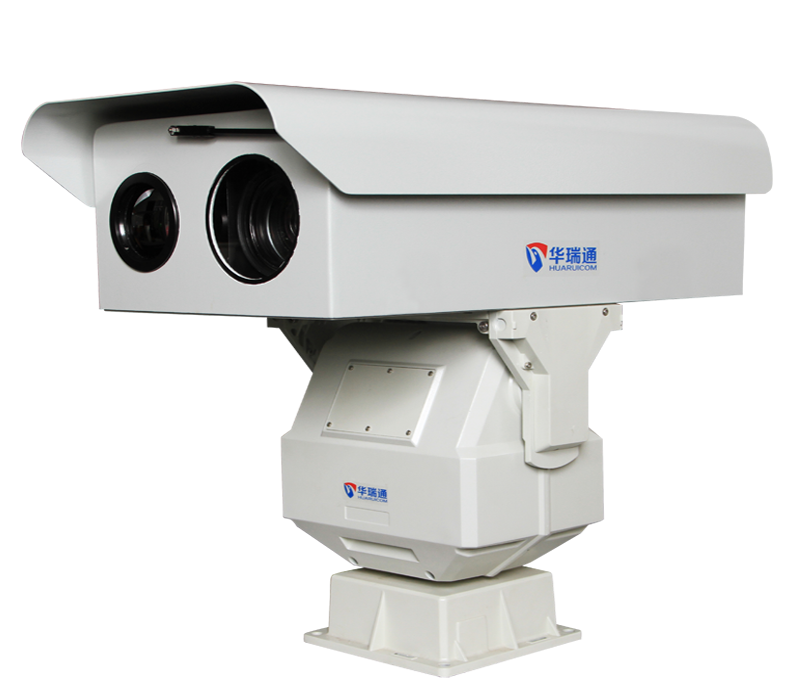
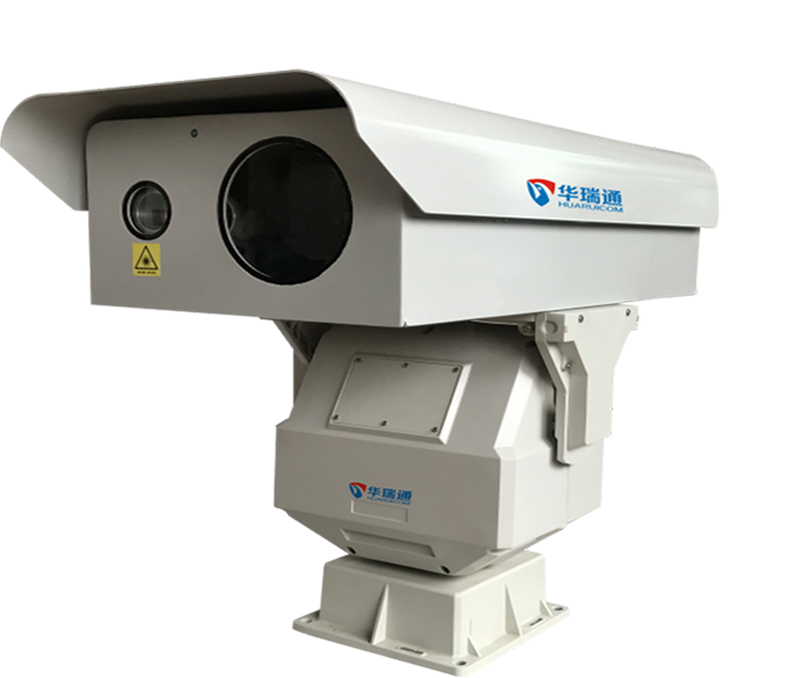
As public awareness of security grows, demands for surveillance cameras have risen; standard infrared cameras no longer suffice, creating a need for a new, superior product. Laser surveillance cameras emerged to meet this need. Beijing Hepu Weishi Optoelectronic Technology Co., Ltd. has developed laser cameras specifically for long-range, day-and-night surveillance. These cameras utilize an active infrared laser as the illumination source and feature high-resolution, low-light, long-focal-length optics, enabling continuous monitoring around the clock. At night, they can detect targets—such as people, vehicles, and facilities—at distances of up to 3,000 meters.
In recent years, terms like "high-definition," "network-enabled," and "intelligent" have become commonplace in the security surveillance industry. In reality, while indoor and daytime surveillance technologies have matured, the true technical challenges lie in outdoor, wilderness, and night-vision monitoring, as well as surveillance in other specialized environments. The key objectives are ensuring clear, long-range visibility and enhancing product reliability. This article provides an in-depth analysis of laser camera applications and selection criteria, offering valuable insights for end-users and system integrators alike.
Comparison of Laser Cameras (Laser Night Vision Devices) with Other Products
Night-vision surveillance technologies are categorized into active infrared and passive infrared systems. Consequently, night-vision products fall into two main groups: active and passive. Active night-vision products primarily include standard infrared cameras and laser cameras, while passive products include low-light night-vision devices and infrared thermal imagers.
Regarding functionality and positioning, standard infrared cameras are suitable for ranges within 100 meters. Laser cameras typically offer a range of 3,000 meters or more and operate effectively in total darkness. Low-light night-vision devices are designed for ranges up to 1,000 meters in environments with faint ambient light (such as moonlight). Infrared thermal imagers are suited for wide-area surveillance exceeding 1,000 meters; however, they cannot resolve fine image details—distinguishing only outlines—and are generally used in scenarios where the primary requirement is target detection rather than detailed identification. From the perspective of product application, the strengths and weaknesses of these night-vision surveillance products are quite distinct.
Standard infrared cameras are affordable and widely adopted; they are primarily used for monitoring residential complexes, corridors, and other short-range, small-scale areas requiring night vision. However, the low barrier to entry has led to a market filled with a mix of high- and low-quality products. Due to inherent physical limitations, the illumination range of common LED infrared lights rarely exceeds 100 meters.
Laser cameras deliver high-quality, clear imagery. They can identify individuals within 1 kilometer and detect them within 3 kilometers, providing a faithful representation of the scene. They offer long-range surveillance, versatility, environmental adaptability, a long service life, and low operational risk. (Note: The active laser light source is generally invisible to the human eye; however, one must avoid looking directly at the source from a very close range when high-power laser cameras are in operation.) While they possess a distinct advantage over infrared cameras in terms of fog penetration, they still lag behind infrared thermal imagers in this regard. Nevertheless, they offer a much better cost-performance ratio than infrared thermal imagers or low-light night-vision devices.
Infrared thermal imagers and low-light night-vision devices were historically reserved for specialized fields such as military operations, criminal investigation, and individual soldier equipment, and they come with a much higher price tag. Low-light night-vision devices require a certain level of ambient illumination; they cannot produce images without natural light (such as moonlight) and have a limited surveillance range, struggling to exceed 1,000 meters. Furthermore, their low-light tubes are susceptible to damage from intense light, rendering them unusable during the day. Infrared thermal imagers are categorized into cooled and uncooled types; they offer good fog penetration, with cooled models capable of observation ranges up to 40 kilometers—making them common in military applications. However, they have strict operational requirements, needing a significant temperature difference between the target and the surrounding environment to produce clear images. They are also heavily influenced by ambient temperature, often yielding poorer image quality in summer. However, because the laser light source used in laser cameras is invisible to the human eye—offering advantages in terms of stealth and superior night-vision range—these cameras have recently been widely adopted across various sectors. These include technical and forensic video evidence gathering by public security, procuratorial, and judicial agencies; specialized news reporting by television journalists; and applications within the military.
Clearly, laser cameras offer distinct advantages in the field of night-vision security surveillance. They are particularly well-suited for applications such as expressways and high-speed railways, police operations, energy and power infrastructure, environmental protection and water conservancy, "Safe City" initiatives, airports and ports, oil fields and depots, long-distance pipelines, large industrial and mining complexes, border and coastal defense, maritime and fishery administration, ecological protection, and military bases.
Advantages of Laser Cameras
Laser cameras integrate a laser light source with a surveillance camera. These laser units employ technologies such as uniform beam intensity and automatic beam focusing. Key benefits include high luminosity, superior image uniformity, low power consumption, and an extended service life.
Laser night-vision technology is a primary method for achieving long-range night surveillance. Laser light is characterized by high brightness, coherence, monochromaticity, directionality, and longevity. Furthermore, CCD sensors exhibit greater sensitivity to laser wavelengths than to those of LEDs, enabling the laser to illuminate targets at much greater distances with significantly higher light intensity than conventional sources.
Compared to standard infrared cameras, laser cameras offer several key characteristics and advantages:
First is the extended surveillance range. Laser cameras are categorized by range into short-range (effective night-vision distance of 100–500 meters), medium-range (500–1,000 meters), and long-range (1,000–3,000 meters) models.
Second is the ability to automatically adjust the lens focal length, resulting in greatly improved image clarity. While standard infrared cameras can capture images at night, they often fail to clearly resolve human faces. Additionally, the limited surveillance range of conventional infrared systems is a significant drawback for high-security environments that demand rigorous monitoring capabilities. Laser cameras operate independently of ambient light levels; utilizing laser infrared components and ultra-low-light sensors, they deliver high-definition night vision—even in total darkness—while maintaining image clarity. Many laser cameras feature intelligent capabilities, automatically adjusting the lens focal length based on the object's distance and movement speed to ensure superior image quality.
Thirdly, they offer a longer service life—typically three times that of standard infrared cameras. This advantage is particularly significant in environments requiring 24-hour surveillance.
Fourthly, they are eco-friendly and energy-efficient. Traditional infrared cameras generate substantial heat; not only do they consume more power, but the inability to dissipate heat effectively causes the camera body to overheat, severely shortening the lifespan of internal electronic components. Laser cameras do not suffer from this issue.
Technical Characteristics and Application of Laser Cameras
Laser night vision technology has been available in China for nearly a decade. As a form of active infrared night vision, it works by optically diffusing a point-source laser beam to provide nighttime illumination; the wavelengths—typically 808, 940, or 980 nm—fall within the near-infrared spectrum. Laser night vision surveillance systems use high-aperture night-vision lenses to capture light reflected from the target, while low-light CCD cameras acquire and output the images. The illumination system, imaging lens, and camera serve as the core components; they must work in concert, as a bottleneck in any single element can prevent the system from achieving optimal performance.
Commonly available integrated and modular laser night vision cameras utilize opto-electro-mechanical integration technologies. They can clearly monitor target activity within a range of 100 to 3,000 meters in pitch-black conditions, with daytime surveillance capabilities extending beyond 3,000 meters.
Key design technologies include the use of high-power semiconductor lasers, which ensure high net output power within a compact form factor—essential for truly achieving the rated surveillance range. Secondary development and optimization of camera modules ensure high image clarity under identical lighting conditions. Additionally, high-speed image focusing algorithms resolve issues such as slow or repetitive autofocusing often encountered in low-light or nighttime environments. During the camera's zoom process, the laser illumination area can intelligently and automatically fill the screen without manual intervention; additionally, the laser's intensity and angle can be adjusted remotely.
High-quality laser cameras must fully address laser safety: the laser remains off during the power-on self-test and automatically switches to the maximum dispersion angle upon activation. Laser power density is automatically controlled; while ensuring adequate illumination, the design strictly limits excessive power density to comply with national safety standards. Furthermore, customizable features such as automatic shut-off can be added; during maintenance or inspection, the system can detect nearby people or objects and immediately deactivate the laser, further ensuring the safety of maintenance personnel.
Technical professionals recognize that the following points are essential when configuring night-vision surveillance systems:
1. Laser activation should be controlled by a photosensor, and the laser's operation must be synchronized with the camera's black-and-white mode. Continuous 24-hour laser operation must be avoided to prevent significantly reducing the equipment's lifespan.
2. Manual laser switching options should be considered based on the environment. For example, in a public square, the laser can be turned off when ambient lighting is active to improve image quality; it can then be turned on when streetlights are off to maintain performance. Remote control capabilities should be included.
3. The laser and lens should be synchronized; as the user adjusts the zoom, the laser automatically tracks to the appropriate position. This eliminates the need for manual laser adjustments after zooming and avoids the common issue where image quality degrades significantly when the beam is widened.
4. Housing design must prioritize laser heat dissipation. Lasers generate significant heat; even with vacuum nitrogen-filled protection, preventing performance degradation is challenging. Rapid heat dissipation and forced-air cooling are essential, and in specialized applications, the installation of a micro-air conditioner may be necessary.
5. The laser system should support preset positions. Mature preset functions already exist for PTZ positioning and lens zoom/focus; a system cannot be considered mature if, after recalling a preset, everything is aligned except the laser. This requirement is particularly critical for alarm-triggered preset recalls. High precision in system presets is also vital; otherwise, the feature becomes practically useless.
6. Whenever possible, select lenses that do not suffer from infrared focus shift. It is easy to imagine the significant operational inconvenience caused if a large number of installed devices required manual refocusing every night and again every day. Unfortunately, few long-range lenses currently feature infrared focus-shift compensation, and product lines remain severely incomplete; consequently, solutions must be developed using technologies such as autofocus, mechanical adjustment, or specialized lens coatings.
7. To ensure efficient laser utilization, coating technology for the lens and the protective front glass is crucial; high-quality coatings can improve infrared light transmission by approximately 20%.
8. For specialized environments, advanced features—such as resistance to salt-spray corrosion, fog penetration, and strong light suppression—should be considered to ensure the equipment is suitable for virtually any setting.
Latest Products
Understand More>