NewsPress center
 Hot Products
 Solution
 Contact information
Home > News> Company News
Summary:Selection of Lenses for Security Surveillance Systems 1. Lens Focal Length: When evaluating lens specifications, system designers must comprehensively consider factors such as the location and distance of the target, CCD specifications, and the desired image quality on the monitor to select the lens with the most suitable focal length. For instance, monitoring a production line typically requires viewing objects at close range, while also demanding high image clarity.
Selection of Lenses for Security Surveillance Systems
1. Lens Focal Length: When selecting lens specifications, system designers must consider factors such as the location and distance of the surveillance target, CCD sensor specifications, and the desired image quality on the monitor to choose the most suitable focal length. For instance, monitoring a production line typically involves observing nearby objects while requiring high image clarity; in this scenario, a fixed-focal-length lens often outperforms a zoom lens, so short-focal-length fixed lenses (e.g., 2.8mm, 4mm, 6mm, 8mm) are usually chosen.
Similarly, when monitoring indoor targets, the focal length need not be very long; short-focal-length manual zoom lenses (e.g., 3.0–8.2mm, 2.7–12.5mm) are commonly selected. For road surveillance, monitoring multiple lanes requires a shorter focal length (e.g., 6–15mm), whereas monitoring traffic lights and license plates at intersections requires a longer focal length (e.g., 6–60mm). Urban security surveillance generally employs motorized zoom lenses with longer focal lengths (e.g., 6–60mm, 8–80mm, 7.5–120mm). Applications such as highways, railways, waterways, environmental monitoring, forest fire prevention, airports, and border/coastal defense typically require motorized zoom lenses with high zoom ratios and long focal lengths (e.g., 10–220mm, 13–280mm, 10–330mm, 15–500mm, 10–1100mm).
2. Field of View (FOV): There are formulas for calculating the field of view; once the lens focal length and CCD sensor size are known, the FOV can be determined. Lenses follow a specific rule: the longer the focal length, the greater the monitoring distance but the narrower the field of view; conversely, the shorter the focal length, the closer the monitoring distance and the wider the field of view. Thus, focal length and field of view are inversely related. In projects requiring manual zoom lenses, the field of view is a primary consideration, so the focal length range is typically determined based on the required field of view. Since motorized zoom lenses allow for remote control of zoom and focus via a keypad based on the scene, the specific field-of-view range is not a primary concern. However, if the lens's starting focal length is too long (e.g., exceeding 20mm), wide-area surveillance cannot be achieved.
3. Lens Aperture: A lens's light-gathering capacity is measured by the ratio of its focal length to its aperture diameter (F=f/D), denoted by the F-number. Every lens is marked with its maximum F-number; a lower F-number indicates a larger aperture. Fixed-aperture lenses are suitable for environments with constant lighting, such as laboratories. Manual-aperture lenses are often chosen for environments where lighting changes are minimal; the aperture is simply set to an optimal value and locked in place. Auto-iris (automatic aperture) lenses should be used for outdoor surveillance requiring 24-hour operation in environments with significant lighting fluctuations.
Applications of Surveillance Lenses
Fixed-aperture lens: Fixed focal length and fixed aperture; primarily for locations with constant ambient light.
Manual-aperture lens: Fixed focal length but adjustable aperture; primarily for locations with constant ambient light but varying brightness levels.
Auto-iris lens (DC-driven): Fixed focal length; uses DC voltage control; for locations with variable lighting but a fixed monitoring range.
Auto-iris lens (Video-driven): Fixed focal length; uses video signal control; for locations with variable lighting but a fixed monitoring range.
Manual-aperture zoom lens: Primarily for indoor locations with variable lighting and varying monitoring ranges.
Auto-iris zoom lens: Primarily for outdoor locations with variable lighting and varying monitoring ranges.
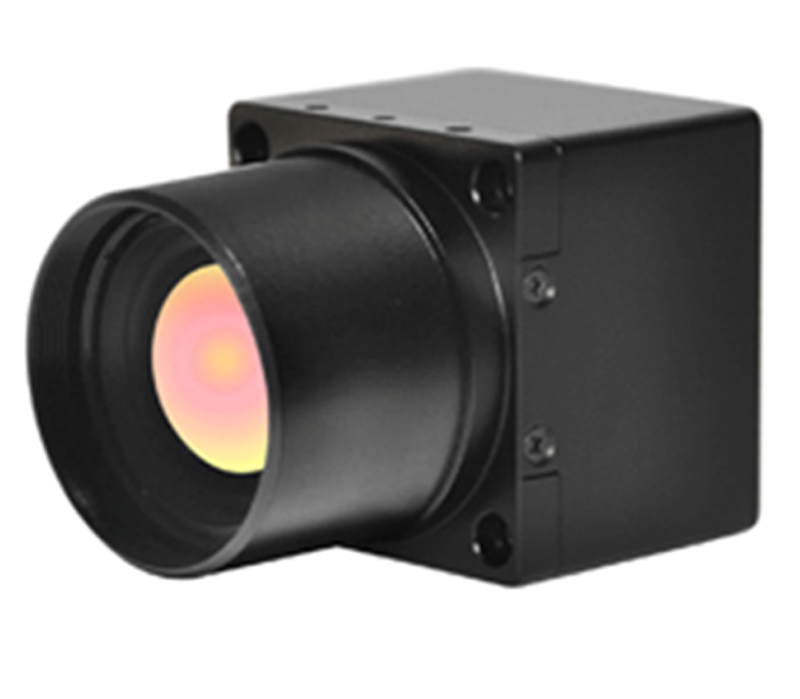
Board lens (on-board): Primarily paired with infrared cameras; suitable for both indoor and outdoor use.
Fisheye panoramic lens: Primarily for indoor locations with variable lighting and a specific monitoring range.
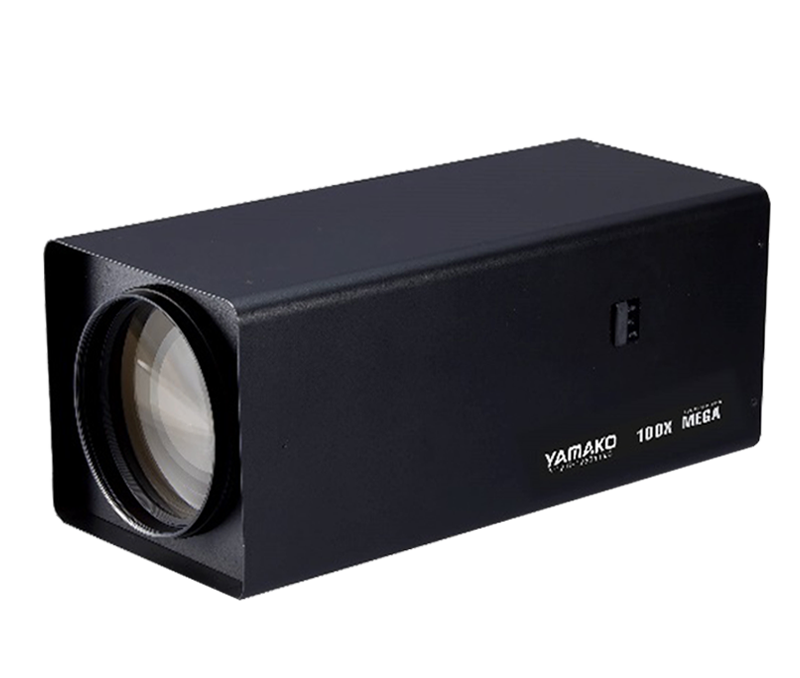
Motorized zoom lens: Allows remote control of focal length, depth of field, and aperture; primarily for indoor or outdoor locations with variable lighting where the depth of field and range need to be adjusted as required.
Latest Products
Understand More>