Summary:Heavy rains have caused traffic paralysis and frequent accidents in Hunan Province:
According to a report from the Hunan Provincial Public Security Department Traffic Police Corps, as of 7:30 a.m. on July 2, due to continuous heavy rains, there were 8 sections of highways and national and provincial roads in Hunan Province affected by landslides and slopes (1 newly added), 17 sections of roads with water accumulation (4 newly added), 1 section of roads with mudslides, and 11 road collapses. Other roads were open to traffic.
Heavy rains have caused traffic paralysis and frequent accidents in Hunan Province:
According to a report from the Hunan Provincial Public Security Department Traffic Police Corps, as of 7:30 AM on July 2nd, due to continuous heavy rains, there were 8 landslides (1 newly added) on highways and national/provincial roads in Hunan Province, 17 flooded sections (4 newly added), 1 mudslide section, and 11 road collapses. Other roads were open to traffic. Traffic control measures were implemented on some highways and national/provincial roads in Hunan Province due to the heavy rains.
my country is a populous country and one of the countries most severely affected by natural disasters in the world. In recent years, extreme weather events have become more frequent, with the frequency and scope of heavy rains gradually increasing. The frequent natural disasters and rapid urbanization have made the public service systems of most cities vulnerable, highlighting the urgent need for the development of smart cities.
Faced with extreme weather, the development and construction of smart cities face many challenges. This article examines how smart cities can strengthen public safety emergency mechanisms and better control dangerous situations, drawing lessons from the recent heavy rainfall and flooding in many parts of southern China.
1. Inadequate Emergency Response Plans for Heavy Rain in Many Areas Require Accelerated Construction of Urban Visual Management Projects
In recent years, the government has vigorously promoted the construction of safe and smart cities, but the effects have not been significant. Currently, our smart city construction is not refined enough, and there is still great potential for development in areas such as smart government affairs and convenient public services. For example, during this rainfall event, many city governments were only able to issue weather forecasts and disaster warnings. More refined aspects, such as urban drainage (flooding) management, comprehensive scheduling and control of pedestrian, vehicle, and logistics flow, emergency response to sudden situations, and efficient allocation of various resources, are still lacking.
Currently, a relatively successful case of visual management is the Dahua Visual Emergency Command and Dispatch System. Dahua Technology has deep technical expertise and experience in various transportation sectors, including highways, airports, ports, railways, urban rail transit, and long-distance passenger transport. Dahua's Visualized Emergency Command and Dispatch System is based on communication networks, intelligent analysis, GIS, and other technologies. It integrates various information resources such as communication dispatch, video surveillance, video conferencing, and power and environmental data to establish a comprehensive, visualized decision-making and command system. Through joint command at the local, cross-regional, and multi-departmental levels, it enables rapid reporting, unified deployment, and timely handling of emergencies. Users can quickly, conveniently, and comprehensively understand the on-site situation and event progress, improving emergency response and decision-making capabilities and efficiency.
In recent years, southern cities have frequently experienced floods, highlighting the inadequacy of urban governance capabilities. Faced with torrential rains, urban emergency response systems appear remarkably vulnerable. Strengthening urban visualized management projects and deeply cultivating smart cities to maximize the effectiveness of urban emergency plans is a pressing issue.
2. Security Monitoring Assists Urban Management in Alleviating Flooding
Urban drainage systems only receive attention during extreme weather events. Since the beginning of the flood season in early July, the strongest localized heavy rainfall has occurred, causing waterlogging on some roads and in low-lying, flood-prone areas in major cities, and localized flooding in some areas, severely impacting the safe and smooth travel of citizens. To further improve emergency traffic management and support during heavy rainfall, traffic police units at all levels are required to be prepared for emergencies and ensure traffic flow under adverse weather conditions. During this period, the role of the "Safe City Skynet" video surveillance system will be emphasized to promptly detect potential hazards in key road sections such as underpasses and overpasses.
Security monitoring has always been a crucial component of "smart city" construction. The development of technologies such as the Internet of Things (IoT) and cloud computing has brought new opportunities to the security industry. The widespread adoption of high-definition technology has led to a gradual expansion of the market share of network cameras. Therefore, clear monitoring footage is no longer an issue. It is believed that in the near future, data transmission will no longer be a problem. The combination of monitoring data and high-speed network transmission, along with the integration of the IoT, will usher in a new era for the security industry, promoting smart city construction and enabling better hazard control.
3. Life Detection and Telemedicine Assist in Disaster Situations
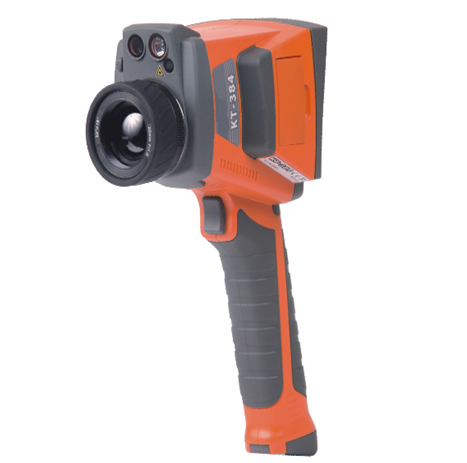
Infrared detection, which we often see in the news and on television, refers to life detectors and thermal imaging cameras used in rescue operations to detect signs of life outside our line of sight. In the face of disasters and emergencies, and in the race against time for rescue operations, it is hoped that more equipment can help rescuers quickly, accurately, and safely locate survivors, thus buying precious time for rescue efforts, minimizing losses, and rapidly restoring normalcy. The application of life detectors and thermal imaging cameras in rescue operations enables rescuers to detect signs of life and quickly assess the condition of the injured in inaccessible and unpredictable natural environments, allowing rescue personnel to make decisions as quickly as possible.
Post-disaster terrain is complex, and some seriously injured patients cannot or should not travel long distances for treatment. They must receive immediate treatment on-site. However, in situations with limited medical resources, telemedicine can solve a significant problem. Telemedicine utilizes computer, communication, and medical technologies and equipment to enable remote "face-to-face" consultations between experts and patients, and between experts and medical personnel, through the long-distance transmission of data, text, voice, and images. Telemedicine is not merely a medical or clinical issue; it also involves communication networks, databases, and other aspects, requiring the integration of these into a network system.
4. Preventing or Mitigating Damage from Lightning
With the rapid development of communication and computer network technologies, computers and networks are increasingly integrated into people's lives and work, heralding the arrival of the digital and information age. The widespread application of these microelectronic network devices makes lightning protection increasingly important. Due to the high density, high speed, low voltage, and low power consumption characteristics of microelectronic devices, they are highly sensitive to various electromagnetic interferences such as lightning overvoltages, power system operational overvoltages, electrostatic discharge, and electromagnetic radiation. Inadequate protection measures can lead to significant losses at any time. It is worth noting that lightning not only damages system equipment but, more importantly, causes communication interruptions, work stoppages, and reputational damage, with indirect losses that are incalculable.
Generally, a network integrated system consists of a main server, a central switch, various branch switches, routers, servers, and a considerable number of terminals. The central switch, located in the main server room, connects to the outside world through a WAN router and is connected to each branch switch via fiber optic cables. The branch switches are connected to each user terminal through hubs. Because network integrated systems have numerous and widespread lightning protection points, lightning protection schemes should be designed from a holistic perspective to protect buildings and the microelectronic network equipment within them from lightning damage or to minimize such damage. Currently, comprehensive lightning protection is adopted, and such schemes should include two aspects: protection against direct lightning strikes and protection against induced lightning strikes. Lacking either aspect results in incompleteness, defects, and potential dangers.
Conclusion: With the continuous advancement of smart city construction in my country, the development of urban safety and emergency response capabilities has become particularly necessary. It is hoped that the torrential rains in southern China will serve as a warning to city managers that torrential rains have become an important standard for evaluating China's urbanization process, and how to develop "smarter cities" is an unavoidable challenge.


 NewsPress center
 Hot Products
 Solution
 Contact information