Summary:Optical Fog Penetration for Surveillance
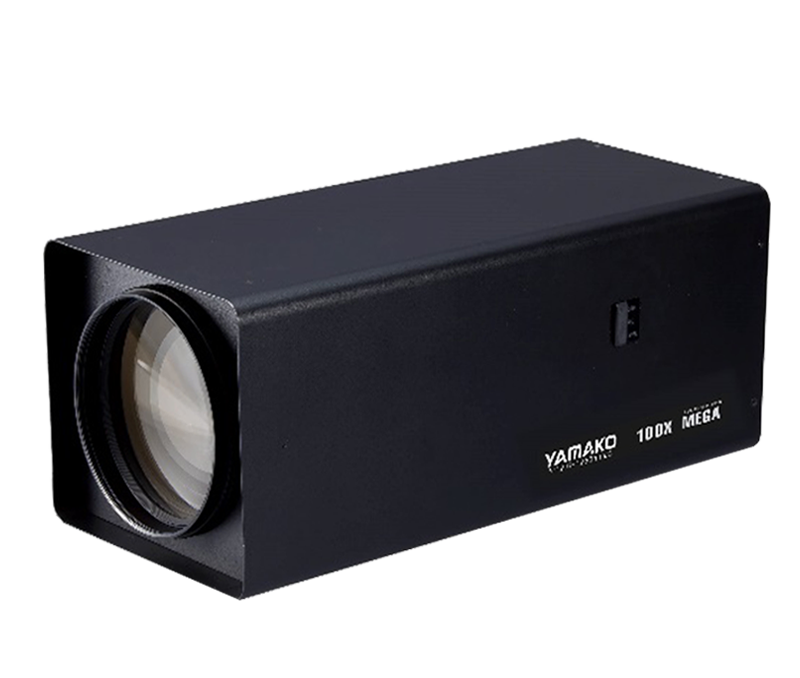
Standard visible light cannot penetrate clouds, fog, smoke, or dust, whereas near-infrared light is capable of passing through haze and particulate matter of certain densities. Optical fog penetration technology leverages the principle that near-infrared light can diffract around tiny particles to achieve accurate and rapid focusing. The technology relies primarily on the lens and optical filters, employing a physical approach...
Fog-penetrating surveillance camera technologies generally fall into four categories:
Optical Fog Penetration
Standard visible light cannot penetrate clouds, fog, smoke, or dust, whereas near-infrared light can pass through haze and smoke of certain densities. Optical fog penetration leverages the principle that near-infrared light can diffract around tiny particles, enabling accurate and rapid focusing. The technology relies primarily on the lens and optical filters, enhancing image clarity through physical means and optical imaging principles. Its main drawback is that it produces only black-and-white surveillance footage.
Algorithmic Fog Penetration
Algorithmic fog penetration—also known as video image enhancement—clarifies images obscured by fog, moisture, or dust. It emphasizes features of interest while suppressing irrelevant ones, thereby improving image quality and enriching the information content.
Optoelectronic Fog Penetration
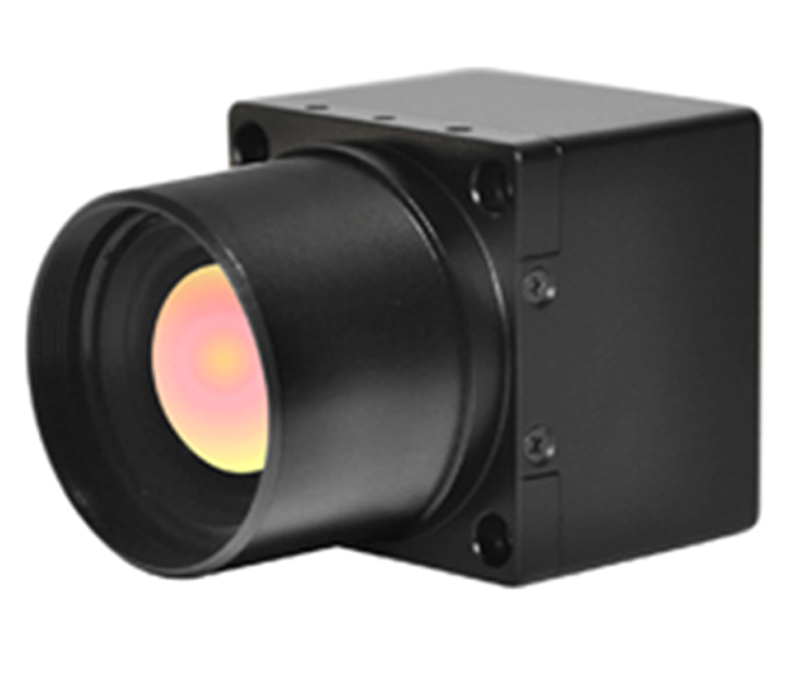
Optoelectronic fog penetration combines the two aforementioned methods. It utilizes an integrated camera module—featuring an embedded FPGA chip and ISP/DSP for data processing—to output color images. On one hand, this technology distinguishes between foreground and background elements as well as fog density, allowing for the selection of specific fog-penetration levels to optimize results for different areas; this differs from older methods that simply boosted overall image contrast, and it operates without latency. On the other hand, high-speed chip processing inevitably generates noise—an issue particularly noticeable in low-light conditions at night. Consequently, these integrated modules typically employ CCD sensors and large-aperture lenses to ensure high-quality low-light performance. Currently, this technology offers the best fog-penetration results on the market.
Simulated Fog Penetration
This method primarily improves the subjective visual experience by manually adjusting parameters such as contrast, sharpness, saturation, and brightness, or by using filter-switching mechanisms to highlight key image details. Its disadvantage is the inability to refocus on the scene, making it difficult to fully satisfy visual requirements.


 NewsPress center
 Hot Products
 Solution
 Contact information