ServiceService support
 Hot Products
 Solution
 Contact information

When video surveillance is mentioned, most people inevitably picture scenes frequently seen on television: criminal investigators reviewing surveillance footage from bank ATMs or branches to probe financial fraud, or traffic police monitoring large screens to manage accidents or congestion on city roads. For many years...
Click View >
1. First, check that the power supply and network cable are functioning correctly. Verify whether the camera's indicator light is on and try pinging the camera's IP address. 2. Check whether the computer's IP address and the network camera's IP address are on the same network segment. An IP address consists of four sets of numbers separated by dots (e.g., 192.168.0.100 or 10.10.1.254); for most users, the address follows the 192.168.X.X format.
Click View >
Video surveillance has several characteristics in terms of storage requirements: 1. The storage capacity requirements of video surveillance are highly flexible. The required storage capacity increases exponentially with improvements in image quality, screen size, and the number of video lines. 2. Video surveillance does not have high performance requirements for storage, but it needs to be able to handle continuous data read and write operations over extended periods.
Click View >
Other malfunctions: A. Pan/Tilt Head Malfunction. A common pan/tilt head malfunction is one that becomes unresponsive or completely unable to rotate shortly after use. Aside from product quality issues, this is mainly caused by the following reasons: a pan/tilt head designed for upright camera mounting (i.e., the camera is positioned on top of the pan/tilt head platform) is being used with a suspended mounting method.
Click View >
Analysis and Solutions for Transmission System Faults: Video surveillance transmission systems primarily rely on video transmission. Due to space constraints, the following discussion focuses on analyzing fault phenomena associated with video transmission and proposing corresponding solutions. A. The most common fault encountered in video transmission is 50 Hz power-line interference. This manifests as the appearance of... on the monitor screen.
Click View >
Common Surveillance System Faults: Equipment and Component Malfunctions: Surveillance systems may encounter various faults during the commissioning, trial operation, and post-delivery phases. These issues can manifest as operational failures, a failure to meet the technical specifications required by the design, or unsatisfactory overall performance and quality.
Click View >
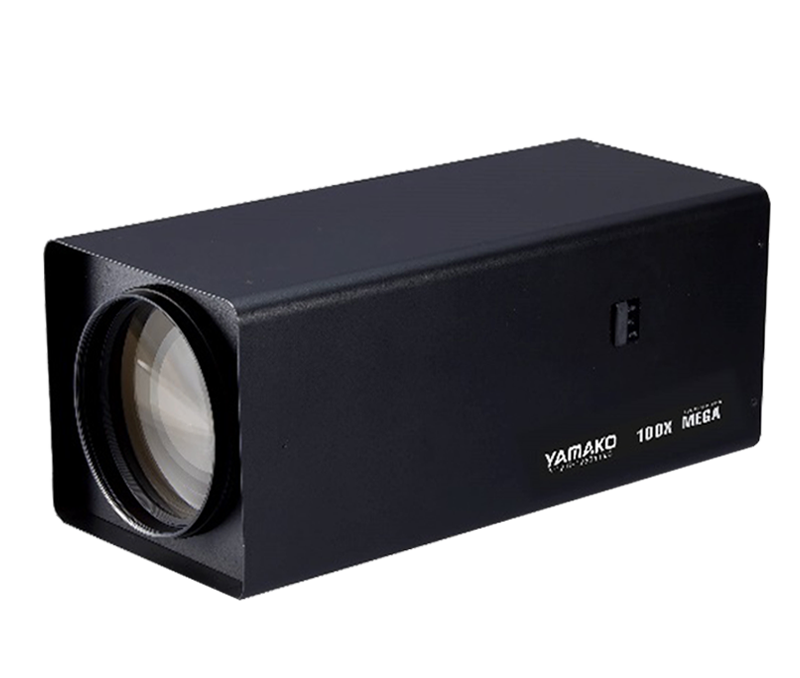
With the widespread use of infrared integrated cameras, fewer and fewer surveillance engineering technicians possess in-depth knowledge of the relationship between cameras and lenses, as well as the selection, matching, installation, and debugging of camera lenses. However, the lens is a crucial component of the surveillance front-end, and its compatibility with the camera determines the effectiveness of the front-end equipment. Although manufacturers of infrared integrated cameras have integrated lenses with cameras...
Click View >
Laser night vision surveillance systems are characterized by the integration of a laser infrared illumination system, a high-magnification long-focal-length zoom lens, a low-light monitoring camera or a low-light infrared camera (ICCD), a video server, and equipment control software, all using scientific and advanced methods. Key features include: 1. All-weather: Employing a dual-detector lens, it can simultaneously connect to both color and monochrome cameras, in conjunction with G...
Click View >